General
- General
- Solutions
- Products
- Cases
- Technology
- News
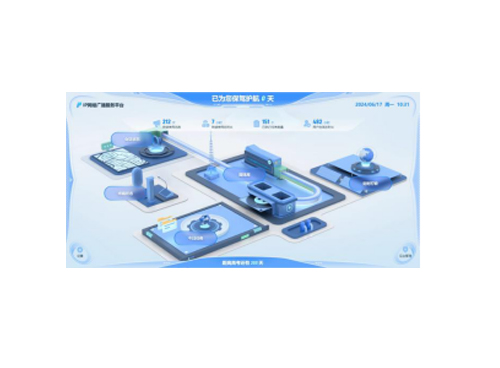
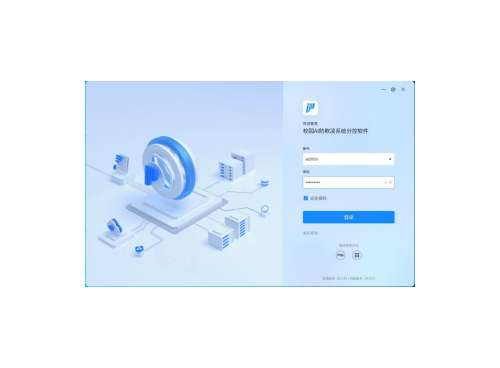
The broadcast system management and control software is installed in the network broadcast control center or computer. It is a comprehensive management platform for broadcast system data exchange, system operation and functional operation. It integrates core technologies such as artificial intelligence, big data visualization, audio and video processing, electroacoustic design, and network technology to create a domestic broadcast system with AI intelligence, Hi-Fi sound quality, low latency and high reliability.
* The platform is the core of the entire system, uniformly managing all audio terminals within the system, including voice control consoles, intercom terminals, broadcast terminals, and fire alarm interface equipment. It displays the real-time operating status of each audio terminal, including IP address, online status, task status, and volume.
* It supports the operation of each audio terminal, manages audio stream transmission, responds to playback requests from each audio terminal, and handles full-duplex audio exchange. It supports a B/S architecture, allowing users to manage terminals, users, program playback, audio files, recordings, and internal communication scheduling via web login.
* It provides full-duplex voice and data exchange, responds to calls and conversation requests from intercom terminals, and supports call modes such as one-click calling, one-click intercom, one-click help, and one-click alarm. It supports automatic and manual answering, and allows for customized answer prompts.
* It manages program library resources, providing scheduled playback and real-time on-demand media services to all audio terminals, responding to program playback requests from each terminal, and providing data interface services to each audio workstation.
* Runs as a background system service, representing a standard enterprise-level server operating mode. The system starts automatically upon system boot, offering higher stability and reliability compared to software running in the foreground.
* The system is compatible with various network architectures including routers, switches, bridges, gateways, modems, the Internet, 3G, 4G, and 5G.
* Supports deployment on Linux operating systems, as well as on Kylin and UnionTech operating systems. Compatibility testing with these operating systems has been completed.
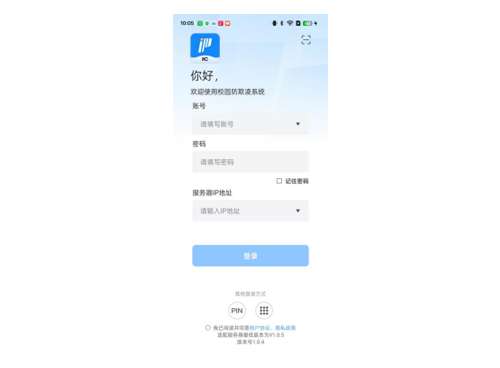
* The system offers multiple login methods, including account password, PIN code, and pattern password. It allows setting limits on the number of failed login attempts and customizable lockout times.
* The platform supports creating new users and managing their permissions, including terminal and group permissions. It supports advanced task priority and role-based permission assignment, and allows disabling or enabling users. Account management for users is supported, with one-click control over this process.
* Supports multi-user, multi-level, specified permission, specified function, and specified terminal categorization management of the background system. It supports multi-user, arbitrary-level distributed control management for remote program playback management.
* Supports unified management of terminal login passwords, multi-level priority management, and easy automatic authorization. Supports customizable task priority, terminal priority, and user priority.
* The system allows for 10-band equalizer adjustment for terminals, which can be saved as templates for easy selection and application to other terminals.
* Supports customizable terminal zone division, enabling real-time zoned management of terminal status, and supports playback and speaking in any zone.
* Supports real-time monitoring of terminal online/offline status and occupancy status, real-time management of terminal volume and current tasks; customizable terminal zones allow for easy and intuitive management of terminal status by region.
* Supports visual dynamic effect display, allowing users to view dynamic effects through an intuitive graphical interface.
* Features electronic and online map functions, allowing terminal deployment on maps and real-time viewing of terminal status; supports GIS map functionality and one-click broadcasting.
* Supports setting different lighting modes for terminals, with customizable settings for red light on/off, green/blue light on/off time (0-10 seconds).
* Supports external power management for audio terminals, including timed on/off and delayed off; supports lighting control with configurable lighting modes.
* Supports time display configuration on terminals, allowing setting of 1-6 brightness levels and the option to hide the time after network disconnection.
* Supports remote control configuration, including a list of remote controls, remote control tasks, and remote microphone tasks. Supports configuring 20 button tasks, including task volume, priority, mixing settings, and playback source information. Playback sources include microphone selection, quick source selection, and music playback.
* Supports detailed terminal export, allowing export of current system terminal configuration details in a table format for easier system management.
* Supports background skinning, allowing users to freely switch skin themes according to their preferences.
* Features multilingual functionality, supporting one-click switching between multiple languages, including Simplified Chinese, Traditional Chinese, English, Korean, Portuguese, Spanish, Russian, French, and Arabic. Supports different national languages.
* Customizable system function modules; freely configurable homepage entry for convenient use of frequently used functions. Customizable interface modes, including classic and simplified modes.
* Any terminal can be designated as a listener to monitor programs playing on other terminals; supports broadcasting, intercom, real-time capture, and terminal monitoring for recording.
* Supports district-wide and zone-wide fire alarm linkage, supports N±N fire alarm modes, and supports both manual and digital alarms. Supports configuring alarms to trigger terminal capture tasks. Supports setting automatic alarm cancellation.
* Supports local audio capture and playback to any designated terminal.
* Supports multiple call strategies, including no-response transfer, busy transfer, and power-off transfer; supports customizable time and transfer strategies. Supports setting intercom terminal call strategies, customizable call duration (0-180 seconds or unlimited), option for automatic answering, and customizable incoming call and waiting ringtones.
* Features resource sharing functionality; users can customize sharing permissions, including group management, timed ringing, timed tasks, one-click alarm tasks, cloud broadcast room, and media library. Authorized users can edit and collaborate.
* Supports categorized and user-specific management of media files, with configurable public/private folders. Private files can be used independently, supporting multi-level folder management and file search. Supports program library resource management, and supports uploading, transcoding, listening, and sharing downloads of mainstream audio formats such as MP3, WAV, FLAC, OGG, AAC, and OPUS.
* Features holiday-themed text and image push notifications, and provides users with options to customize device text and image displays, offering richer and more personalized push notification functionality.
* Supports the system's recording function and stores recorded data to meet users' long-term storage and management needs.
* Offers 4×100 levels of customizable task priority configuration (server priority, task priority, user priority, terminal priority) to meet the automatic scheduling of various priority tasks.
* Logs the system's operating status, recording system operation and terminal working status in real time, with every call, conversation, and broadcast operation recorded.
* Supports remote firmware upgrades for terminals, eliminating the need for local upgrades and reducing the workload of maintenance personnel.
* Features system detection functions including system status (available hard drive, remaining memory, process detection, network detection) and terminal status (CPU, memory, load balancing, playback status, sound card status, link bottlenecks, network packet loss rate, maximum frame interval, audio similarity), and supports one-click report export.
* Supports viewing today's task list, easily managing all scheduled tasks executed today and their execution status.
* Includes a system assistant for quick access to operation manuals, module descriptions, task reminders, and feedback.
* Supports modifying the system name, with unified display across all three platforms after modification. Supports user-defined display slogans below the Big Data Panel's Technology Warehouse mode; slogans can be set to static or dynamic formats, such as "100 days until the College Entrance Examination."
* The system has anti-packet loss capabilities, employing a data redundancy encoding and decoding algorithm to achieve smooth audio playback even in network environments with severe packet loss. It supports packet loss rates above 37.5%, providing highly reliable network audio transmission technology for broadcast systems and comprehensively improving audio stability and smoothness.
* Supports simultaneous activation of multiple timed ringing schemes. Each scheme supports multiple tasks running concurrently, and allows one-click activation/deactivation of all schemes.
* Supports offline timed ringing, enabling automatic ringing even when the terminal is offline or powered off.
* Timed ringing supports cloning any number of scheduled tasks within the same scheme or across schemes, with task execution and stop control, and timed task disabling and enabling functions. Supports one-click scheme adjustment, enabling one-click schedule changes, batch one-click modification of ringtones, and supports hourly, daily, weekly, monthly, and yearly modes.
* Programmable timed tasks support programming multiple timed schemes, allowing selection of any terminal and setting of any time; supports timed task execution testing and setting repetition cycles. Supports multiple audio source selections for timed tasks (music playback, sound card capture, terminal capture).
* Supports batch modification of time, volume, and execution terminal for timed tasks, and supports batch import and export of timed tasks.
* Supports terminal short-circuit input linkage triggering, allowing for arbitrary configuration of linkage trigger schemes and the number of triggering terminals. Trigger schemes include short-circuit output, music playback, and patrol alarms.
* Supports timed patrol function, allowing for customization of patrol task execution time and repetition cycle. The indicator light flashing interval can be customized from 0-30 seconds.
* Supports setting holidays or special dates to disable all timed tasks at specified times.
* Users can select specific terminal devices and set specific time points. The system will automatically perform volume equalization adjustments on the selected terminals at those times, allowing for proportional volume settings to improve the listening experience.
* Features a timed insertion mode, allowing for setting the execution time range and interval time. It automatically generates ringing tasks in batches, eliminating the need for individual editing and simplifying the process.
* Supports terminal audio capture and playback, enabling the capture and playback of audio files for listening tests.
* Supports configuring specified terminals to enable exam mode within a specified time period. In exam mode, digital and analog backups can switch between each other, and one-click termination of exam mode for all devices is supported.
* Features an exam mode with configurable terminal freeze time, prohibiting terminal tasks during the freeze period, suitable for exams or rest periods. In exam mode, analog/digital backups can switch between each other. In case of network or power outages, the system employs real-time system monitoring and device self-checking technology, ensuring a listening backup switching delay of less than 0.03 seconds, achieving truly smooth, lag-free, and delay-free exam listening backup.
* Features a one-click inspection function, supporting the acquisition and transmission of on-site speaker sound status to the system. It incorporates audio similarity (DTW) detection technology, automatically comparing the transmitted data with the task playback data for each terminal, outputting an audio similarity comparison report for convenient and rapid maintenance, ensuring normal on-site audio playback.
* Features terminal list import/export and timed bell import/export functions, automatic terminal online, manual terminal addition, and batch volume editing.
* Supports terminal power outage/network outage monitoring. The backend displays terminal abnormal status, device operating status, terminal resource utilization, external device status, and device local playback status.
* Supports audiobook mode when setting up ringing and scheduled tasks. In this mode, users can choose loop playback or random playback. The audiobook mode has a memory function, remembering the last playback progress and resuming playback from where it was interrupted. Users can define the last playback progress, timer settings, playback count, and task end time management.
* Includes a task recycle bin, allowing deleted scheduled ringing or scheduled tasks to be placed here for one-click restoration/deletion.
* Supports terminal volume equalization adjustment, allowing users to customize the execution time and executing terminals. The system will automatically adjust the volume proportionally on the selected terminals at that time.
* Supports terminal tamper alarms. Terminal removal triggers an alarm, or other terminals trigger an alarm in conjunction with the alarm; supports automatic alarm deactivation for alarm tasks.
* The system supports monitoring configuration, allowing clients to connect to 6 channels of video monitoring signals, enabling users to view real-time footage from monitoring points bound to the device. Furthermore, the client also has the function of broadcasting to broadcast devices associated with specific monitoring equipment. The system offers configuration options for motion detection, boundary crossing detection, area intrusion detection, target entry into the area, target exit from the area, obstruction alarm, and loitering behavior detection and monitoring. It can automatically trigger preset audio alarms for real-time alerts.
* Built-in TTS (Text-to-Speech) function supports text-to-speech conversion, with adjustable speech rate (1-10), loop count, and voice package selection. It also supports uploading/downloading audio files and viewing TTS conversion logs.
* Supports broadcast receiver prompt tones; a "ding-dong" prompt tone is added when a broadcast receiver responds to a broadcast task.
* Supports extended telephone broadcasting functionality. Through the IP VoIP interface, it can connect to external telephone lines or PBX systems to initiate area-wide broadcasts, zone broadcasts, and intercoms.
* Supports integration with high-precision GPS-based timing systems, enabling independent broadcast system time synchronization without the internet, ensuring a system time error of less than 1/300,000 second per year.
* Supports setting automatic hang-up for broadcast and intercom timeouts; after setting, the task automatically ends after the specified time.
* Features digital mixing capabilities, supporting customizable mixing configurations for various tasks, including broadcast/intercom/on-demand tasks on different devices. It supports configuration options for microphone foreground and background audio, and allows users to adjust the volume of the background audio.
* Includes an editor with a component library and 48 standardized design styles. Users can freely divide functional areas and utilize drag-and-drop module configuration, enabling zero-code interface design to meet the needs of different scenarios.
* Supports scene management and permission settings, allowing user accounts to be specified and adapted to client interface scenes. Different roles have different permission isolations.
* Supports UHF configuration. Supports fixed-frequency mode (allowing channel and custom frequency settings) or automatic frequency sweep mode selection. Supports RF signal and connection status display, detecting channel status and presenting it through graphs. Supports power settings, gain settings, reverb (ratio, delay, level), and equalization (bass, midrange, treble) configurations for terminal devices, which can be applied to other terminal devices.
* Supports CD player operation monitoring, displaying real-time operating status data and automatically alerting users to abnormal conditions.
* Supports power monitoring, tracking accumulated power consumption, input power, input frequency, internal temperature, ambient temperature, and ambient humidity. Input current, input voltage, and daily power consumption are displayed as graphs. Supports energy metering, allowing real-time viewing of energy consumption data. Real-time monitoring of device power status automatically triggers alarms in case of overload or power outages. Supports remote intelligent power switching, timed power switching, parameter configuration, and factory reset. Automatically records task logs and supports alarm configuration.
* Supports IPv6 network protocol deployment, providing service capabilities in an IPv6 network environment. The system operates in dual-stack network (IPv4/IPv6) scenarios.
* Supports button configuration download functionality, allowing pre-configured media file download tasks associated with buttons (custom buttons, alarm buttons, and audio associated with short-circuit inputs) to be sent to the device. It also displays the offline download status in real time (used storage space, download progress, and file list management), and supports deleting offline tasks. In the event of a network interruption, the terminal device can execute button configuration tasks offline.
* Supports configuration of recording file and log file storage duration.
* The platform features configuration options for anti-bullying keywords, alert type detection, push notification text, and TTS broadcasting linkage devices. It supports real-time detection of anti-bullying keywords on-site via anti-bullying alarm terminals and triggers TTS broadcasts.
* The AI alert terminal supports alert area association, accurately locating alarm trigger points and providing efficient alert and response capabilities for the anti-bullying system.
* Supports a "Do Not Disturb" setting; during specific periods or in specific areas, the AI alert terminal's audio-visual prompts and information pushes can be disabled through a freeze configuration.
* While providing real-time and accurate alerts, the AI alert terminal supports single or batch processing of alert events based on their actual situation (e.g., false alarms, drills, real alerts) to meet the needs of different scenarios.
* AI alert events support log analysis.
* Supports big data management of campus AI alert anti-bullying systems. The data center allows viewing of AI alert point distribution, alert keywords, alert event time distribution, and today's alert event time distribution analysis, providing strong support for security management and decision-making.
* Supports SSL certificate configuration; a one-click restart enables HTTPS service and encrypted transmission.
* Equipped with the domestic Wanli database, the product has undergone joint testing with Wanli Security Database software in terms of functionality, performance, and compatibility, ensuring full compatibility and stable and efficient overall operation.
Please leave a message if necessary, we will contact you as soon as possible!